E-Way Easy blog

E-Way Bill articles

Generation, validity, distance, Part A/B, cancellation and special cases.

An e-way bill is the electronic document from the official e-way bill system that must travel with goods when the consignment value is above ₹50,000, with some exceptions. These articles cover who generates it, Part A and Part B, validity by distance, vehicle changes, job work, returns and what to do when it expires.

Start here: E-Way Bill in reading order

New to the topic? Read these in order. Each one builds on the one before, so you get the rules first and the special cases after.

  1. 1What Is an E-Way Bill? A Complete Guide for Indian BusinessesWhat an e-way bill is, when you need one and how the parts fit together.
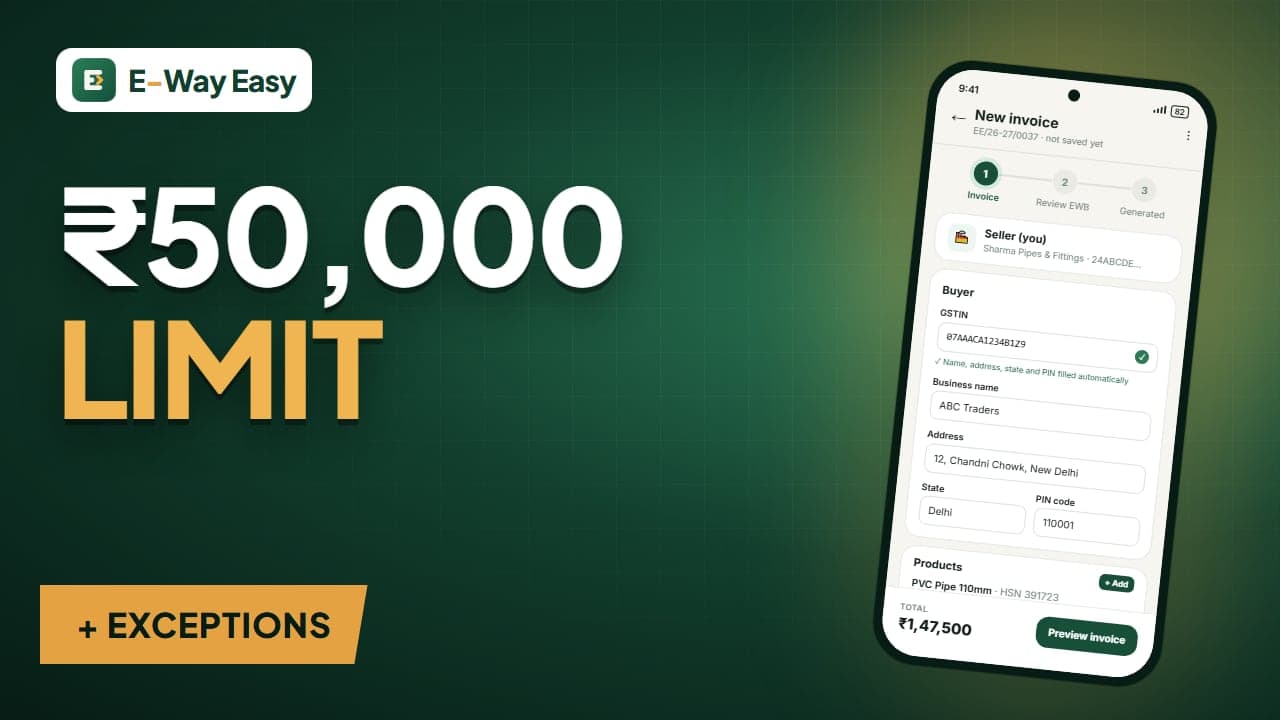
  2. 2E-Way Bill Limit and the ₹50,000 Threshold: Rules and ExceptionsThe ₹50,000 value test, how to calculate it and the cases that need no e-way bill.
  3. 3Who Is Responsible for Generating an E-Way Bill?Supplier, recipient or transporter: who must generate, and who is at risk if nobody does.
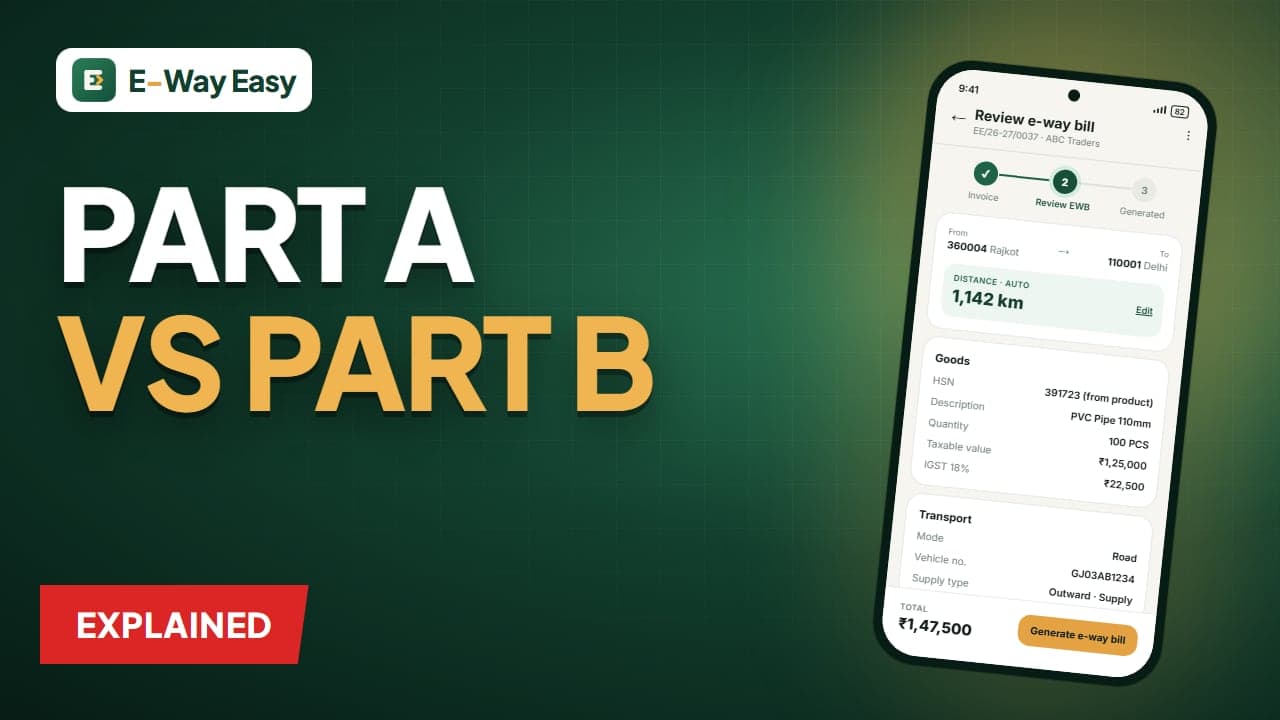
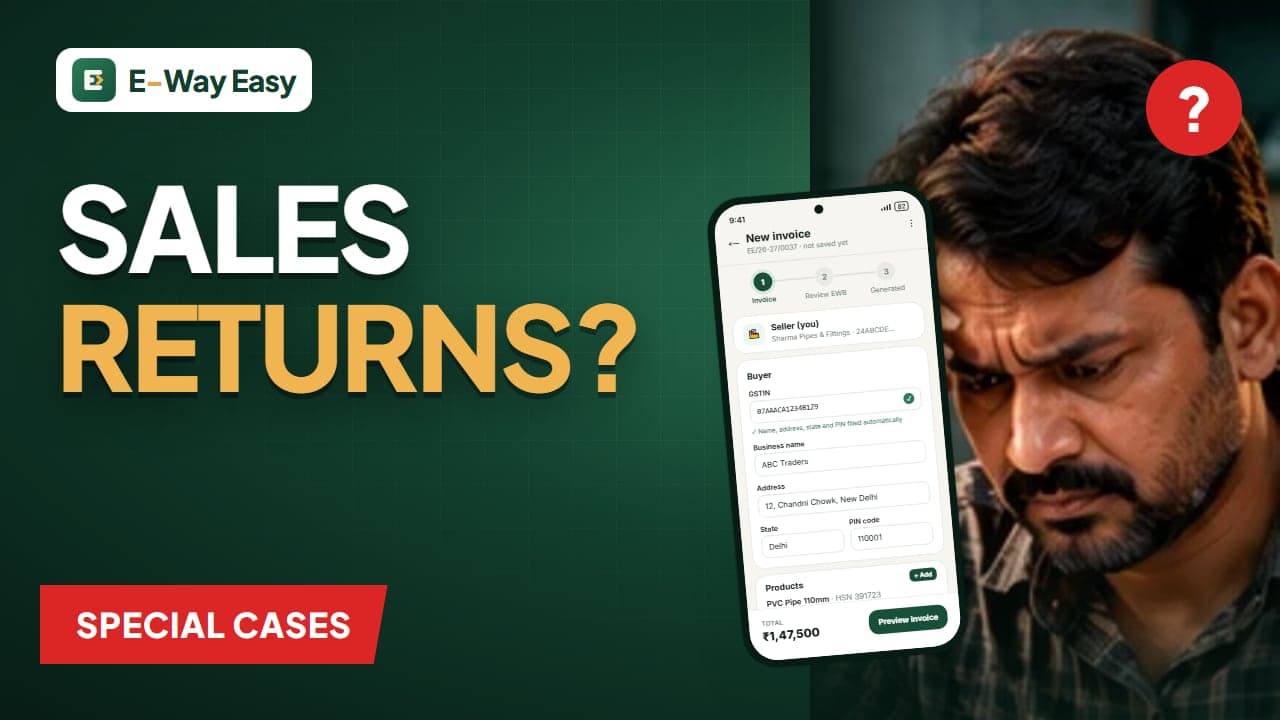
  4. 4E-Way Bill Part A and Part B ExplainedWhat goes in each part, and why Part A alone does not let the truck move.
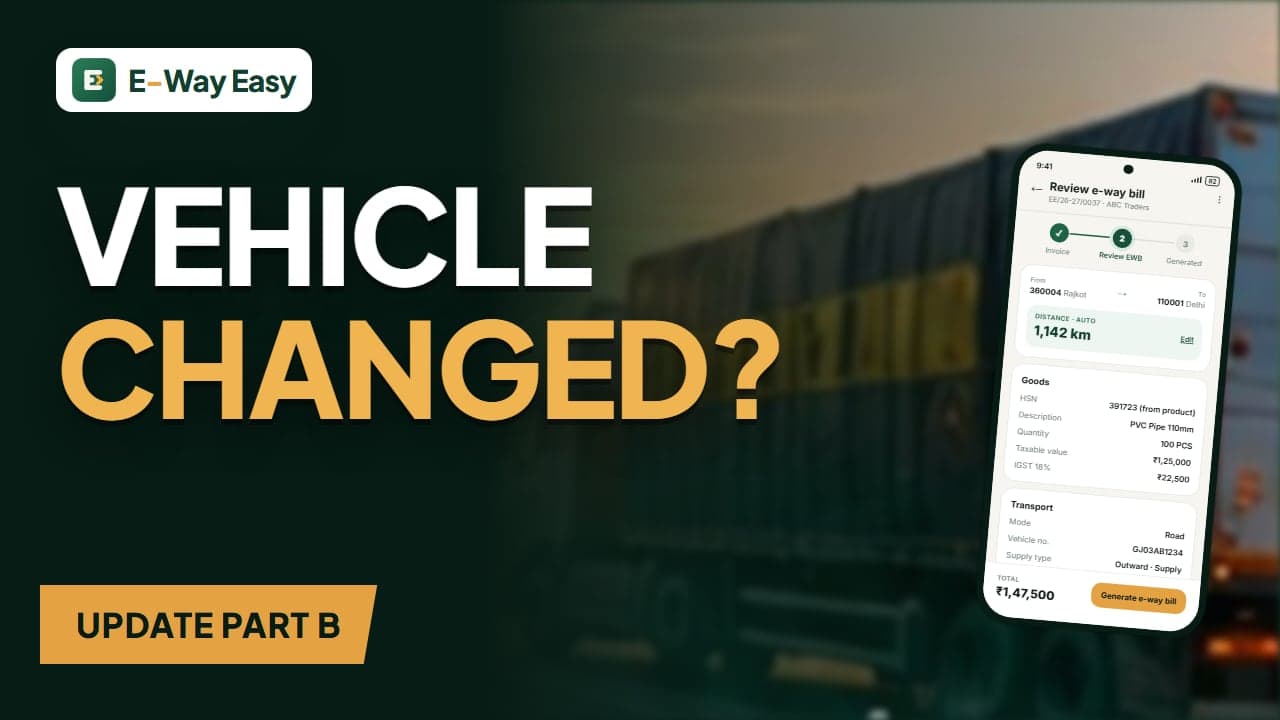
  5. 5How to Update Vehicle Details in an E-Way BillChanging the vehicle or transporter on the way without a new e-way bill.
  6. 6What to Do When an E-Way Bill ExpiresThe 8-hour extension window and what to do if you miss it.

Quick rules

The decisions that come up most often, as plain if-then rules. They are a starting point: the linked articles explain the exceptions.

If…Then…
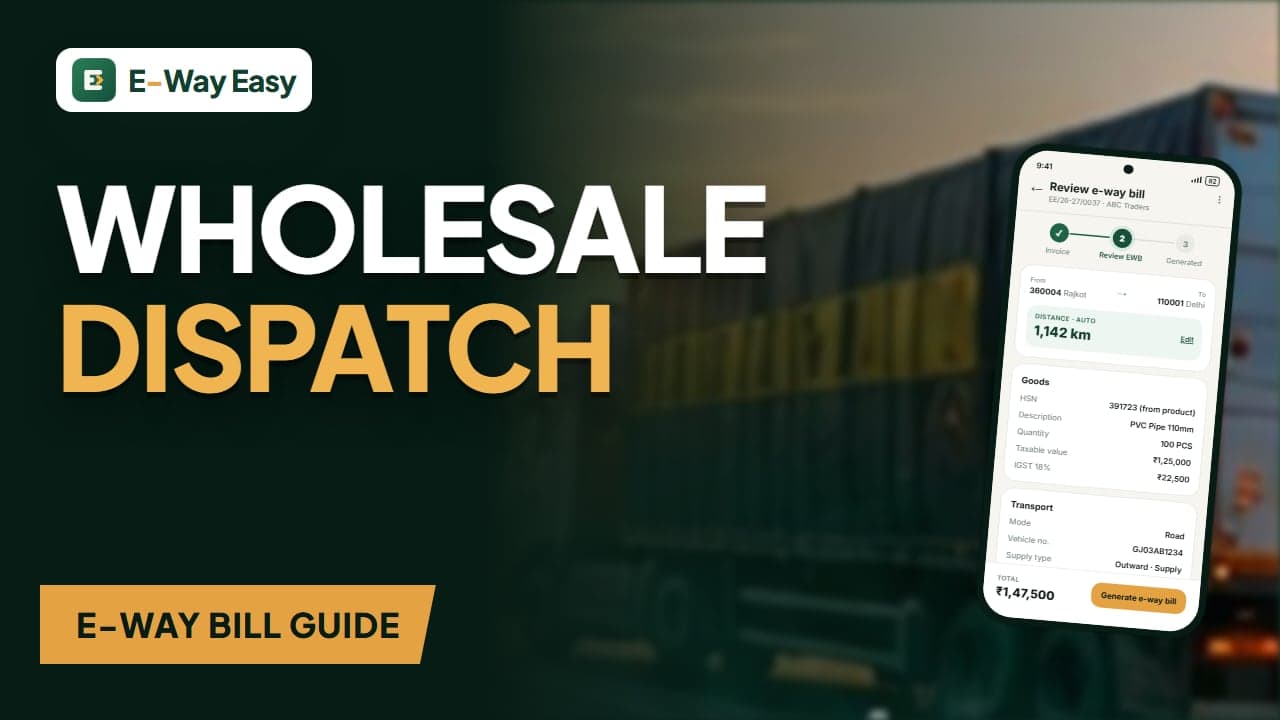
Consignment value (taxable value + GST) is above ₹50,000Generate an e-way bill before the goods move, unless an exception in Rule 138(14) applies.
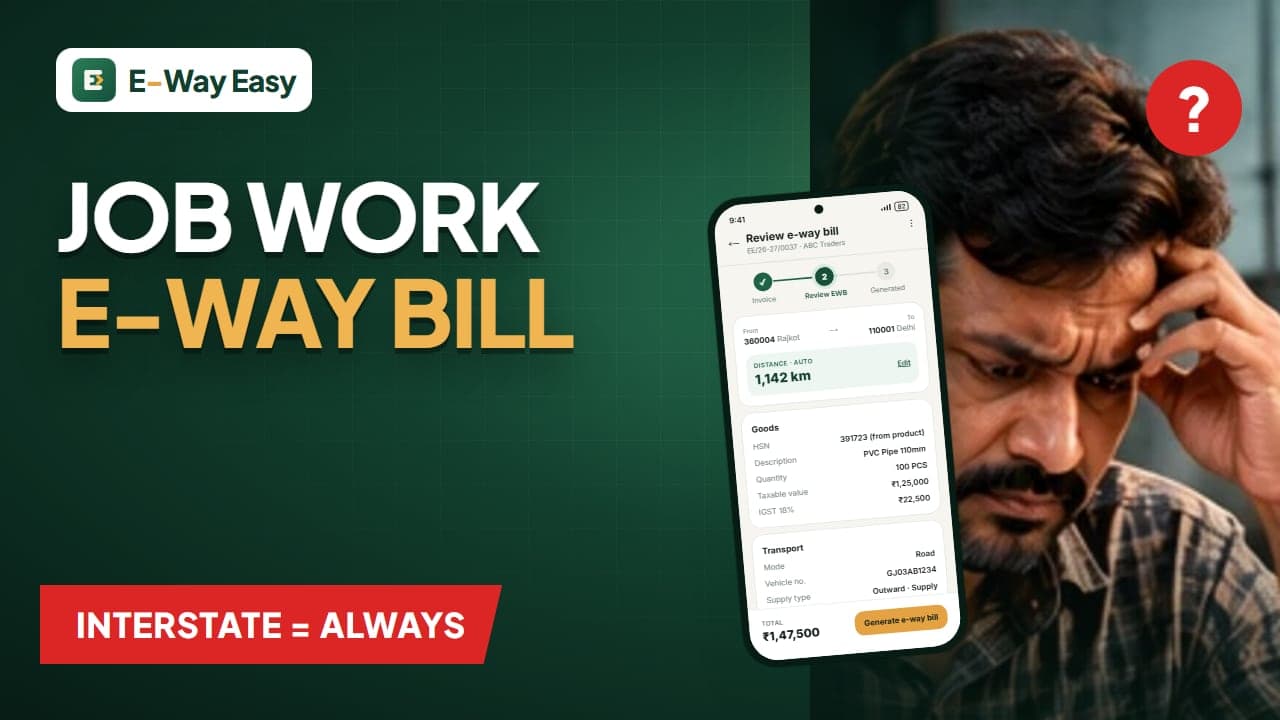
You send goods inter-state to a job workerAn e-way bill is needed whatever the value.
Part A has a wrong GSTIN, value or invoice numberCancel within 24 hours and generate a new one. An e-way bill cannot be edited.
The vehicle changes on the wayUpdate Part B. You do not need a new e-way bill.
The goods will not arrive before validity endsExtend within 8 hours before or after expiry, up to 360 days in total.

Common mistakes

  • Testing the ₹50,000 limit on taxable value alone. The consignment value includes GST.
  • Filling Part A and forgetting Part B. Without Part B the e-way bill is not valid for movement, except the short within-state leg to or from a transporter (up to 50 km).
  • Typing a distance more than 10% above the portal’s PIN-to-PIN figure. The portal rejects it.
  • Generating against an invoice dated more than 180 days ago. The portal has blocked this since 1 January 2025.

Free tools for this topic: E-way bill eligibility checker · Distance and validity calculator · The complete e-way bill guide

Questions about E-Way Bill articles

Where should I start if I am new to e-way bills?

Read “What is an e-way bill?” first, then the ₹50,000 limit article. Together they tell you whether you need one and who must generate it. Part A and Part B comes next.

Are these articles official guidance?

No. E-Way Easy is independent and not affiliated with GSTN or NIC. Each compliance article lists its official sources and a last-verified date, so check the e-way bill portal before you act.

Does the e-way bill number change in 2027?

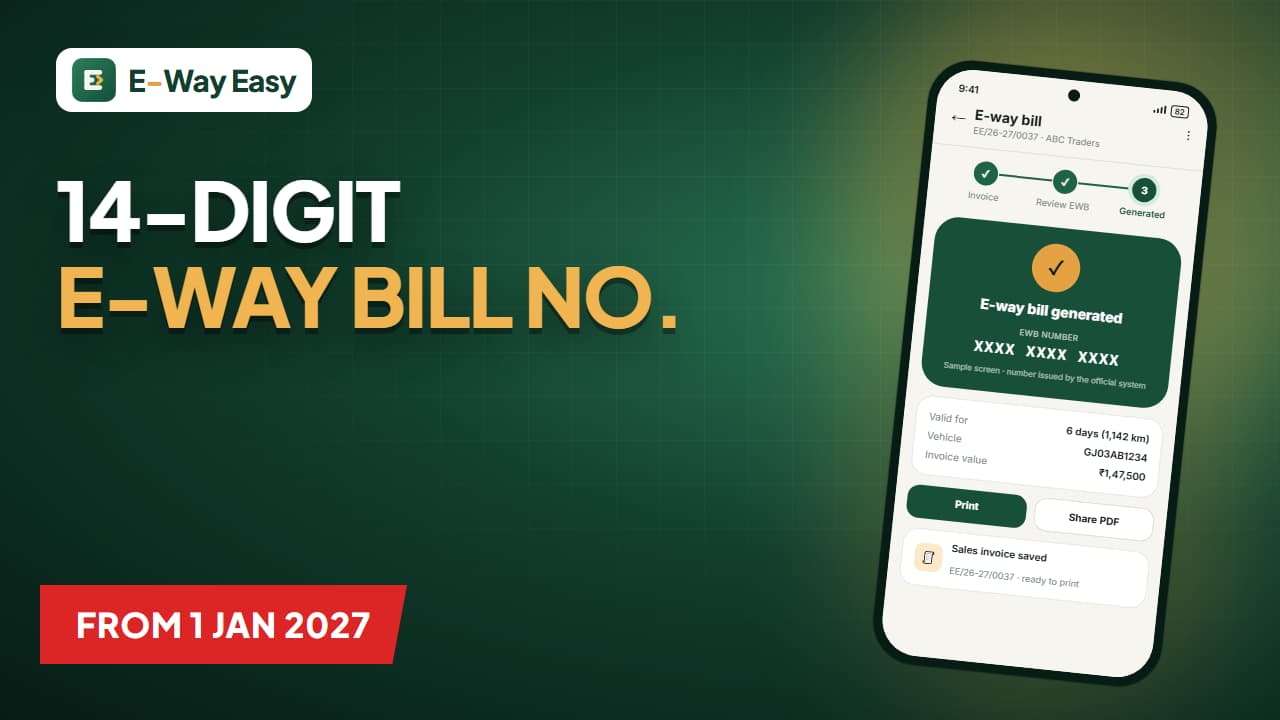
Yes, as reported from a GSTN advisory: from 1 January 2027 the number grows from 12 to 14 digits and the consolidated number from 10 to 11. The rules themselves stay the same.